Dangote Takes On West Africa’s Power Crisis, Pledges to Lead Regional Electricity Corridor
Africa’s leading industrialist, Aliko Dangote, has put electricity at the top of West Africa’s economic agenda. He has pledged to lead investment in a regional power corridor to end the power shortages that have long held back the region’s industries.
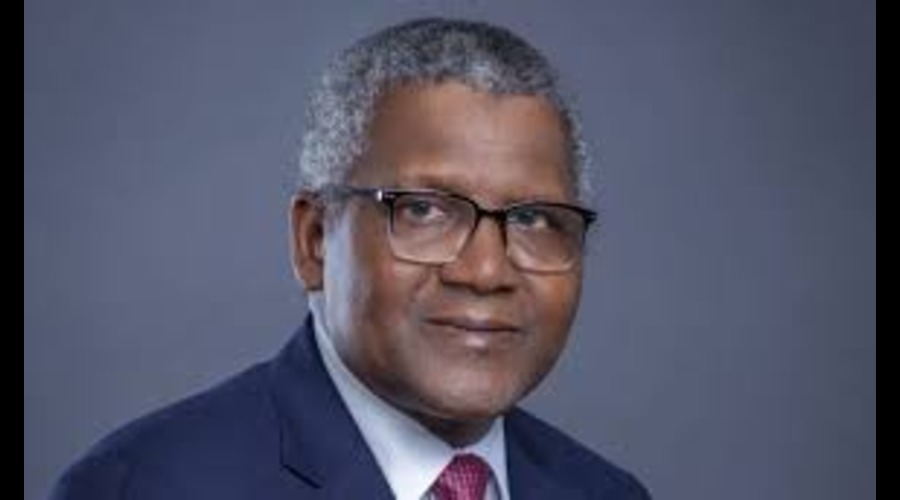
Africa’s leading industrialist, Aliko Dangote, has put electricity at the top of West Africa’s economic agenda. He has pledged to lead investment in a regional power corridor to end the power shortages that have long held back the region’s industries.
Dangote, president and chief executive of Dangote Industries Limited, spoke at the inaugural meeting of the newly formed ECOWAS Business Council in Lagos, which he chairs. There he unveiled Power ECOWAS for Regional Industrialisation, an initiative to raise private capital, link electricity supply with industrial demand across borders, and cut businesses’ reliance on costly self-generation, according to a statement on Sunday.
Dangote said unreliable electricity was pulling capital away from manufacturing.
“A manufacturer who generates his own electricity is effectively operating two businesses: the business he originally intended to establish and an electricity business he was compelled to establish,” he said. “He commits capital, employs personnel and assumes operational risk that his competitors in more industrialised economies do not ordinarily have to bear.”
He said thousands of companies were each paying to solve the same electricity problem, tying up money that could otherwise expand production and create jobs.
“Imagine how much additional manufacturing capacity we could establish if a significant proportion of the capital were directed into actual production, not generating power,” he said.
Dangote proposed treating electricity as a shared regional industrial resource. That way, factories could be built where they have the best commercial advantages, not just where investors can afford to generate their own power.
He said West Africa’s energy resources, existing transmission infrastructure and unmet industrial demand were a strong basis for a commercially viable power corridor funded largely by private investment. He pledged to lead the effort, invest in the infrastructure needed, and bring in other businesses and financial partners.
Under his plan, the council will identify industrial demand that can support long-term electricity purchases, assess opportunities in generation and transmission, bring together investors, lenders and technical partners, and build on existing regional investments, especially the West African Power Pool.
Africa’s richest man urged members to start with a manageable number of commercially credible projects and develop a model that can be copied across the region.
“A successful initial investment will do more to attract additional capital than an extensive catalogue of untested proposals,” he said. He called for a small implementation team, clearly defined responsibilities and a timetable for presenting the first investment proposals to the Council.
Speaking to reporters after the meeting, Dangote used his group’s own shipping costs to show the barriers facing trade within the region.
“For example, today we take clinker to Ghana. The amount of money we pay, which is just one and a half days of steaming, is more than what we are paying taking gypsum from Spain, which is 12 days,” he said.
He said such costs wipe out the advantage neighbouring countries should have over distant markets and weaken regional production networks. Businesses should be able to manufacture in Côte d’Ivoire or Ghana and sell competitively in Nigeria, he said. Instead, poor roads, checkpoints and border delays keep getting in the way.
Dangote backed the proposed six-lane Abidjan–Lagos highway. He urged governments and investors to develop it as a full economic corridor with electricity infrastructure, manufacturing clusters, logistics hubs and industrial parks.
He said the council would deal directly with governments on investment obstacles and ask the ECOWAS Commission to step in where regional action is needed. Governments, he argued, should provide credible and predictable policies, while businesses raise capital, take investment risks and create jobs.
“We are the people that can easily go and raise funds. We will risk our own money. We will also borrow more to make sure that we develop our own regional market,” he said.
President of the ECOWAS Commission, General Birame Diop, said the Council was expected to support trade, investment, enterprise development, job creation and energy access, and to help governments make decisions that advance integration.
He recalled past efforts to connect the region’s economies, including the ECOWAS Trade Liberalisation Scheme, infrastructure development and work towards a single currency. He stressed that an organised private sector was essential to achieving those goals and urged members to keep engaging with policymakers.
Other newly inaugurated members include Aigboje Aig-Imoukhuede, chairman of Coronation Group; Muhammed Jah, founder and chairman of QGroup; Ibrahim Mahama, founder and CEO of Engineers & Planners Ltd; Kandeh Kolleh Yumkella, special envoy for the West Africa Integration and Investment Summit, and Benoni Urey, chairman of PLC Investments.