
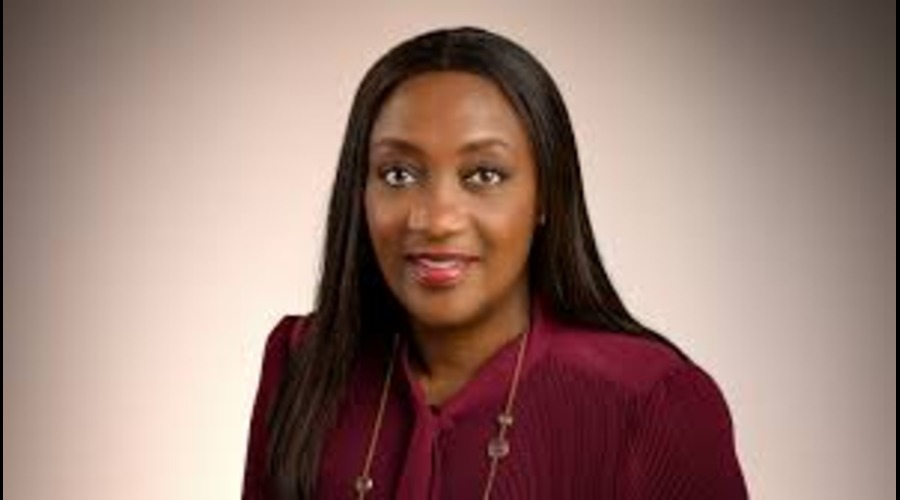
Modupe Elebute-Odunsi: I left the UK to reshape Nigerian cancer care — not to run Lagoon Hospital
For Dr. Modupe Elebute-Odunsi, co-founder and CEO of the Marcelle Ruth Cancer Centre & Specialist Hospital, the definition of success was once very straightforward: reaching the highest clinical and academic levels in the United Kingdom.
Speaking on Friday at The Platform, organised by The Covenant Nation in Lagos, she revealed that an inner calling prompted her to trade a comfortable, prestigious career in the UK’s National Health Service (NHS) to transform cancer care in Nigeria.
“Coming back to Nigeria was never about running Lagoon Hospital,” said Elebute-Odunsi, whose parents established the hospital when she was about 22 years old.
Born to two professors — Emmanuel and Oyin Elebute — and raised on the University of Lagos campus, Elebute-Odunsi’s path to medicine was cemented early on. A childhood visit to see her grandmother, who suffered from diabetes complications, sparked a determination to heal.
“All I wanted was to be whoever I needed to be to make her better,” she recalled. “Later, I realised that meant I wanted to become a doctor.”
Elebute-Odunsi left medical school just before her 21st birthday, but the road to becoming the doctor she wanted to be — a haematologist — was long. She said she spent about 14 years obtaining postgraduate qualifications, driven by an early fascination with blood disorders after seeing sickle cells under a microscope in medical school.
As a student, she sought out professors working on sickle cell disease and volunteered in communities such as Yaba and Gbagada, supporting families and helping set up a clinic with friends to counsel mothers managing children’s sickle cell complications.
Her career later took her to the United Kingdom, where she trained in internal medicine and pathology. She secured highly coveted consultant and research roles at St. George’s Hospital and King’s College Hospital in London, working extensively with the pharmaceutical industry and mentoring the next generation of medical professionals.
However, around her 50th birthday, a sense of disconnect set in.
“My definition of success had become very narrow,” Elebute-Odunsi said. “I couldn’t understand why I should continue sitting in clinics caring for patients who were not ‘my’ patients — my people — or spending my teaching and mentoring time on students who were not ‘my’ students.”
When she informed the UK’s General Medical Council that she intended to leave, the regulator responded with surprise, asking whether she was sure and if anything could be done to keep her.
Turning clarity into action took years. As a wife and mother of five — with her youngest two still in secondary school — leaving security wasn’t simple. She negotiated part-time work for four years while laying the groundwork to return home.
When she arrived in Lagos at the end of 2019, just before COVID-19 struck, her vision was to build a “one-stop” cancer care centre where diagnostics and treatment could happen under one roof, with standards strong enough to retain trust locally.
Before Marcelle Ruth Cancer Centre was established, oncology care in Nigeria was fragmented, forcing patients to move between labs, imaging centres, and clinics, often across long distances.
Elebute-Odunsi highlighted how families were often fractured, jobs lost, and children separated across households just so a parent could seek treatment in countries like India, Germany, or the UK.
She pointed out that one potential investor shared how his mother’s cancer treatment in Germany forced the family to split five children across different households.
From five staff members in December 2019, she said, the hospital has grown to over 100 and has become the first private hospital approved to train oncology residents in Nigeria.
Her work has also expanded into professional community-building. She said an invitation to 50 senior women in healthcare grew into the Women in Healthcare Network—drawing 300 women at launch and 1,200 at its second national conference, with chapters now in Abuja and the UK, and new mentorship and faith-based arms planned.


