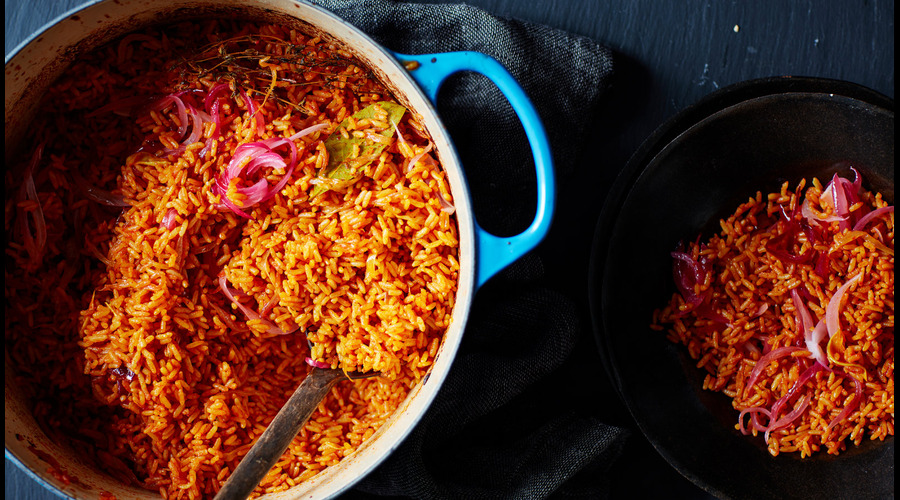
Nigeria Posts Biggest Decline in Jollof Cost Since 2016
Nigeria’s cost of cooking a pot of jollof rice recorded its biggest quarterly decline since the index began tracking prices in July 2016, as falling chicken, beef and vegetable oil prices eased pressure on food costs.
The SBM Jollof Index fell 11.5 percent to N26,178 in September from N29,578 in June, a reduction of N3,400, according to SBM Intelligence’s third-quarter report.
The decline came as food inflation in Africa’s most populous nation remained elevated at 19.59 percent in September, slightly above the 19.57 percent recorded in August and well above headline inflation of 14.63 percent.
Headline inflation declined from 15.39 percent in August to its lowest level since 2025, while annual core inflation eased for a fourth consecutive month to 12.95 percent, its lowest level since January 2021, from 13.29 percent in August.
The Jollof Index recorded its sharpest quarterly fall in its decade-long history, although a correction for an ingredient-recording error in Ibadan reduced the adjusted decline to 8.5 percent.
“The composition of the fall is where the quarter gets interesting: protein led it,” SBM Research said in the report, noting that chicken and beef prices reversed a trend that had driven food costs higher for much of the previous 18 months.
Across the 13 Nigerian markets tracked, chicken prices fell by a combined N9,700, while beef prices declined by N4,100. Vegetable oil prices dropped by N7,350, making the three ingredients major contributors to the quarterly reduction.
The report attributed the decline in poultry prices partly to cheaper maize-based feed, the reopening of previously closed farms and improved availability of day-old chicks.
In Kano, chicken prices fell from N7,000 to N4,500, while beef prices rose from N4,000 to N5,000 per kilogram, highlighting differences in supply conditions affecting the two proteins.
Local farms have also gained ground in poultry supply, according to SBM Intelligence. A protein seller at Kurmi Market told researchers that roughly 70 percent of chicken supply now comes from farms in Oyo, Kaduna, Jos and parts of Kano State, rather than frozen imports routed through Lagos.
“The production cycle runs about six weeks, so the sector recovered quickly,” the report said, pointing to cheaper feed and renewed farm activity as factors supporting increased supply.
The seasonal harvest also contributed to the decline, particularly through improved supplies of tomatoes and peppers. The index fell for three consecutive months after peaking in June, extending the downward trend into September.
However, the reduction did not translate into uniform relief across the country. Nine of the 13 Nigerian markets recorded lower costs, while Port Harcourt was the only market where the index increased, rising 2.6 percent to N32,000 amid flooding and disruptions to local farms and transport routes.
The report also cautioned that the headline decline was overstated by an ingredient-recording error in Ibadan, where curry and thyme prices were recorded in different quantities. Excluding the error, the national index declined by 8.5 percent to approximately N27,055.
Despite the quarterly reduction, the cost of preparing jollof remained 5.8 percent higher than in September 2025 and 540 percent above its July 2016 level.
SBM Intelligence warned that the relief could prove temporary, as high transport costs, inadequate storage and potential increases in poultry feed prices continue to threaten food affordability.