
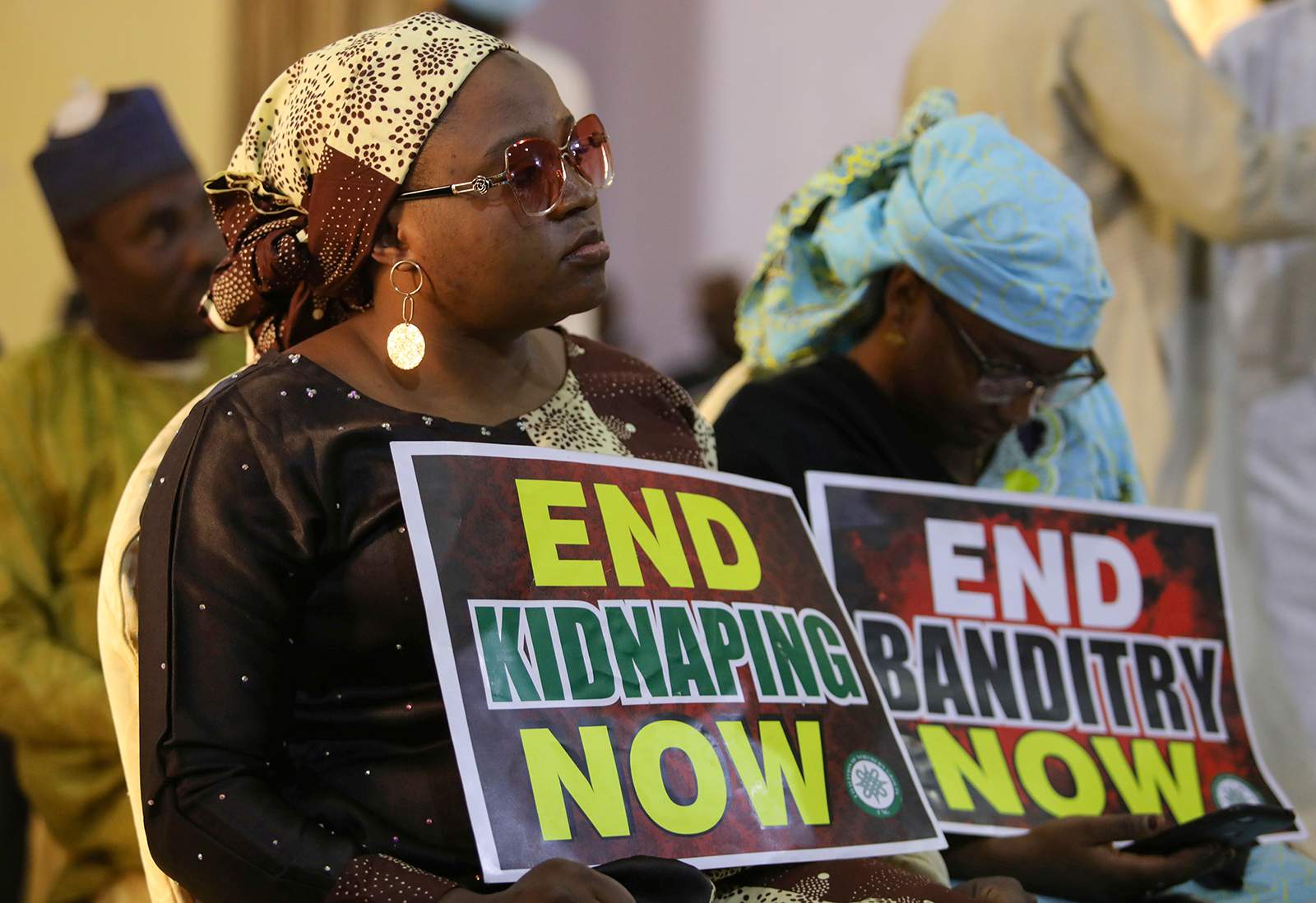
Boko Haram Gets 90% of N7.8bn Ransom Payments Amid Nigeria’s Kidnapping Crisis
- At least 1,142 people were killed, 7,825 abducted in a year as ransom payments tripled
Nigeria’s kidnap economy became more lucrative in the year to June 2026, with ransom payments more than tripling to N7.78 billion even as the total amount demanded by abductors fell by more than half, according to a new report by SBM Intelligence.
The African research and intelligence firm said a faction of Boko Haram accounted for about 90 percent of all ransom paid during the period, collecting N7 billion from just eight incidents.
The findings point to a sharp change in the economics of kidnapping in Africa’s most populous nation, where organised terrorist groups are increasingly able to convert mass abductions into large cash payments.
Between July 2025 and June, at least 7,825 people were abducted in 1,411 kidnapping incidents, while a further 302 kidnap-related incidents involving security operations were recorded, SBM said. At least 1,142 people were killed during the period.
The amount demanded by kidnappers fell to N22.86 billion from N48 billion in the previous year. However, ransom actually paid rose from N2.56 billion to N7.78 billion, pushing the collection rate to 34 percent from 5.35 percent.
“Nigeria’s kidnap industry has been captured at the top,” the report, highlighting the growing dominance of organised terrorist groups in the ransom market.
Two mass abductions accounted for almost all of Boko Haram’s haul.
In April, a faction operating under commander Ali Ngulde abducted 416 people in Ngoshe, Borno State, and demanded N5 billion. SBM said the full amount was reportedly paid, making it the largest ransom recorded in its dataset.
Earlier, gunmen abducted 315 pupils and staff from St Mary’s School in Papiri, Niger State, with multiple intelligence sources putting the ransom paid at N2 billion.
Together, the two incidents generated N7 billion — almost the entire amount paid to kidnappers across Nigeria during the year.
The contrast with conventional kidnappers and bandits is striking. According to SBM, the broader group of kidnappers and bandits demanded N13.49 billion from 146 incidents but collected only N719.4 million, giving them a collection rate of just 5.3 percent.
Boko Haram’s JAS faction, by comparison, demanded N9.2 billion and collected N7 billion, representing a 76.1 percent collection rate.
“Measured by what was demanded, the kidnap economy is a crime of the many; measured by what was actually paid, it is dominated by a single terrorist organisation,” SBM said.
The report also found that mass abductions have become the dominant model. Although mass abductions represented 28.1 percent of all kidnapping incidents, they accounted for 6,222 victims, or 79.5 percent of all people abducted during the period.
Northern Nigeria remained the epicentre, accounting for 93.7 percent of all victims. Zamfara recorded the highest number of victims at 1,921 from 236 incidents, followed by Sokoto with 1,157 victims and Kaduna with 814.
Beyond the immediate cost to families, SBM warned that the ransom economy is imposing wider economic costs by diverting household resources, discouraging investment, increasing security expenses and reducing agricultural output.
“Insecurity of this order deters both domestic and foreign investment, raises the cost of doing business through private-security spending and ransom risk,” the firm said.
It added that money that could have gone into “consumption, investment or enterprise” is instead being diverted to ransom payments, effectively transferring resources to groups that sustain the violence.
For Nigeria’s economy, the report suggests that kidnapping is no longer simply a security problem. It has become a financial channel through which organised terrorist groups extract wealth from households and communities and recycle it into the insurgency.


