
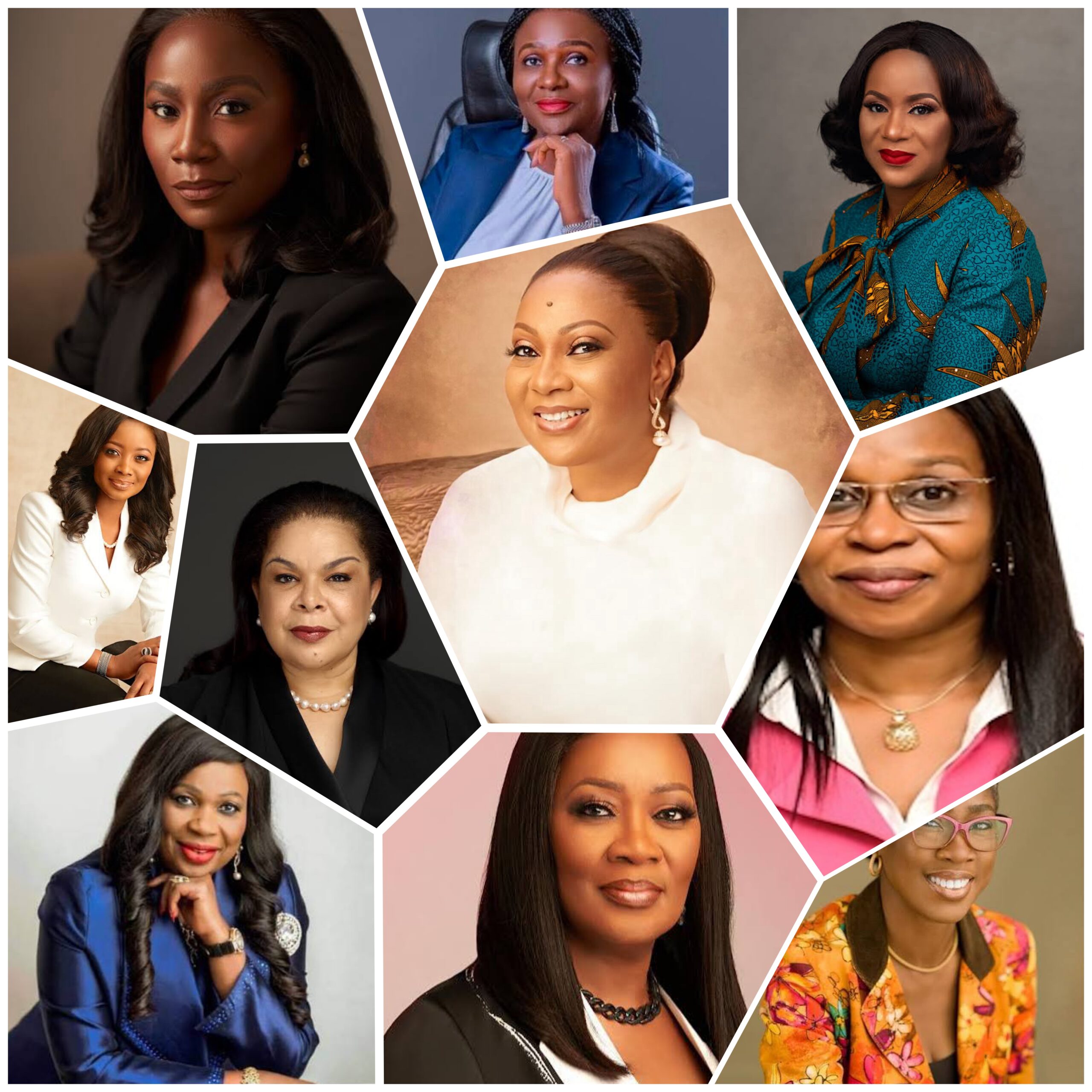
From Oil Rigs to Power Plants: 15 Women Leaders in Nigeria’s Energy Sector
As the world accelerates toward cleaner, more reliable energy, Nigeria finds itself at a crossroads: revive oil production, unlock its vast gas potential, and finally deliver dependable power to homes and industries. At the heart of this complex transformation is a quiet revolution — led by women.
Across oil, gas and electricity, Nigerian women now hold some of the most strategic roles in policy, regulation, operations and advocacy.
From the corridors of the Presidency to remote production fields and bustling urban substations, these 15 women are doing more than breaking glass ceilings. They are redesigning the systems that power Africa’s largest economy.
Their stories offer a different lens on International Women’s Day 2026. They show that gender inclusion is not just about representation; it is about results. Where women are influencing policy, regulation, investment and operations, Nigeria’s energy sector is seeing more focus on transparency, safety, community impact, innovation and long-term value.
As the country navigates the twin imperatives of energy security and energy transition, the leadership of these women — across oil, gas and power — underscores a simple truth: the path to a more resilient, inclusive and sustainable energy future will be lit, in no small part, by women.
Setting national direction
In the Presidency, Olu Arowolo Verheijen, Special Adviser to the President on Energy, occupies one of the most pivotal seats in Nigeria’s policy ecosystem. With a background in investment, gas commercialisation and advisory work on African energy projects, she brings private-sector discipline to public policy.
Her brief is broad but urgent: unlock gas for power and industry, improve the investment climate across oil, gas and renewables, and align Nigeria’s energy agenda with wider economic reforms and climate commitments. In a country struggling with power deficits and fiscal pressures, Verheijen’s work sits at the intersection of growth, stability and the global energy transition.
At the Federal Ministry of Petroleum Resources, Patience Nwakuso Oyekunle, Permanent Secretary, serves as the top technocrat anchoring Nigeria’s petroleum policy. She coordinates the Ministry’s interface with regulators, the national oil company and private operators, translating political direction into actionable programmes. Her portfolio spans sector reforms, stakeholder engagement and the delicate balancing of fiscal, environmental and community-development objectives.
On the regulatory front, Oritsemeyiwa Amanorisewo Eyesan, Chief Executive Officer of the Nigerian Upstream Petroleum Regulatory Commission, oversees the rules of engagement in Nigeria’s upstream oil and gas sector. At a time when capital is increasingly selective and carbon-conscious, Eyesan’s commission manages licensing rounds, reserves certification and compliance with technical, environmental and local content standards. She is central to efforts to grow production and attract new investments while implementing the Petroleum Industry Act in a transparent, investor-friendly manner.
Indigenous operators at the front line
While policymakers and regulators redraw the rules, a generation of female chief executives is proving that Nigerian-owned energy companies can compete and lead.
Catherine Uju Ifejika, Chairman/CEO of Brittania-U Nigeria Limited, is widely acknowledged as one of the first Nigerian women to build and lead an indigenous exploration and production company. Under her leadership, Brittania-U has navigated marginal field development, offshore operations and complex community relations. Her company’s trajectory illustrates how indigenous firms can grow reserves and production, while her personal advocacy has focused on inclusion, mentorship and capacity building for younger professionals.
At Moni Pulo Limited, another indigenous upstream player, Seinye Lulu-Briggs combines commercial leadership with philanthropy. As Chairman/Chief Executive, she leads operations in some of Nigeria’s prolific basins, embedding corporate governance and social investment into the company’s DNA. Through the O.B. Lulu-Briggs Foundation and related initiatives, she channels upstream profits into health, education and community development projects across the Niger Delta — showing that oil production and social impact need not be at odds.
Elozino Olaniyan, Chief Executive of Midwestern Oil & Gas Company, heads one of the most successful local E&P firms to emerge from Nigeria’s marginal field programme. Under her stewardship, Midwestern continues to consolidate its upstream footprint while exploring synergies in midstream and power. Known for her focus on operational excellence, safety and community-inclusive development, Olaniyan’s approach underscores how local independents can run technically sound and socially responsible operations.
Building Nigeria’s gas backbone
If oil still funds the budget, gas increasingly underpins Nigeria’s promise of industrialisation and cleaner energy. Few voices have been as consistent in championing this shift as Audrey Joe-Ezigbo, CEO of Falcon Corporation Limited. A prominent advocate of midstream and downstream gas, she leads investments in gas distribution infrastructure that bring cleaner, more reliable energy to factories and households. Beyond the C-suite, she is active in entrepreneurship development and leadership coaching, often highlighting the need for more women in both energy and business.
In the downstream and gas-based retail segment, Nkechi Obi, Founder & CEO of Techno Oil Limited, has built a diversified energy company with a strong footprint in LPG, lubricants and fuel distribution. A leading proponent of LPG adoption, she has championed investments in cylinder manufacturing, bottling and distribution to deepen clean cooking nationwide. Her work directly supports national objectives to reduce biomass use, cut emissions and improve health outcomes — while building a resilient indigenous brand.
Winifred Akpani, CEO of Northwest Petroleum & Gas, has similarly expanded the role of Nigerian-owned companies in the downstream sector. What began as a modest trading outfit has grown into an integrated player spanning trading, storage and retail. In a market defined by price volatility and regulatory shifts, Akpani is particularly associated with disciplined risk management, robust supply chains and a culture of ethical business practices and talent development.
For Victoria Samson, Founder & CEO of BOVAS Group, downstream expansion has been driven by a different kind of differentiation: transparent pricing and customer service. From a single outlet, BOVAS has grown into a respected indigenous brand with a widening network of fuel stations, logistics assets and storage facilities. In a liberalised market where trust is often in short supply, Samson’s emphasis on integrity and prudent growth has turned BOVAS into a touchstone for what a local operator can achieve.
Service, supply chains and local content
Around the big producing assets, a complex ecosystem of service providers keeps Nigeria’s oil and gas sector moving. Here too, women are leading.
Patricia Simon-Hart, Founder & Managing Director of Aftrac Limited, has carved a strong niche in oilfield services and engineering support. Aftrac provides technical, marine and logistics services to major operators, proving that Nigerian-owned service firms can meet demanding quality and safety standards. An active advocate for local content and women’s economic empowerment, Simon-Hart uses her experience to mentor emerging entrepreneurs seeking a foothold in the energy supply chain.
At the interface of advisory and enterprise support is Oladunni Owo, CEO of Blackgold Energy Authorities and National President, Women in Energy, Oil and Gas Nigeria. Through Blackgold, she focuses on capacity building, advisory and business development across the value chain. Through the association, she pushes for gender-inclusive policies, more procurement opportunities for women-owned businesses, and training programmes that prepare female engineers, financiers and managers to thrive in a historically male-dominated field.
Rewiring the power sector
Oil and gas may earn the headlines, but for most Nigerians, the real test of reform is simple: does the light stay on? In the electricity sector, women now lead some of the country’s most critical institutions.
At Ikeja Electric, one of Nigeria’s largest distribution companies, Folake Soetan is tasked with turning around operations in a dense, demanding market. As Managing Director, she has driven initiatives in metering, network upgrades and safety, while pushing digitization to improve billing and customer engagement. Her mandate is to reduce losses and gradually improve service reliability—a difficult balancing act in a sector still grappling with legacy debt and infrastructure deficits.
Just across Lagos, Wola Joseph-Condotti, interim CEO of Eko Electricity Distribution Company, steers a Disco that serves some of the country’s most commercially significant districts. With a background in law, governance and commercial management, she approaches power distribution through the lens of compliance and stakeholder trust. Under her leadership, Eko has intensified efforts around network rehabilitation, revenue assurance and customer-centric service models, seeking to bridge the gap between regulatory expectations and consumer realities.
On the generation and infrastructure side, Jennifer Adighije, Managing Director of the Niger Delta Power Holding Company, oversees one of Nigeria’s most strategic power portfolios: the National Integrated Power Projects. Her task is to optimize existing generation plants, complete legacy projects and strengthen the crucial interfaces with transmission and distribution so that available megawatts become delivered power. In a space where public and private interests intersect, Adighije’s role in structuring partnerships and transactions is central to unlocking more reliable electricity nationwide.


