UK-Backed £746m Overhaul of Nigeria’s Busiest Ports Begins
Nigeria broke ground on the rehabilitation of the Lagos Port Complex (Apapa Quays) and the Tin Can Island Port Complex on Wednesday.
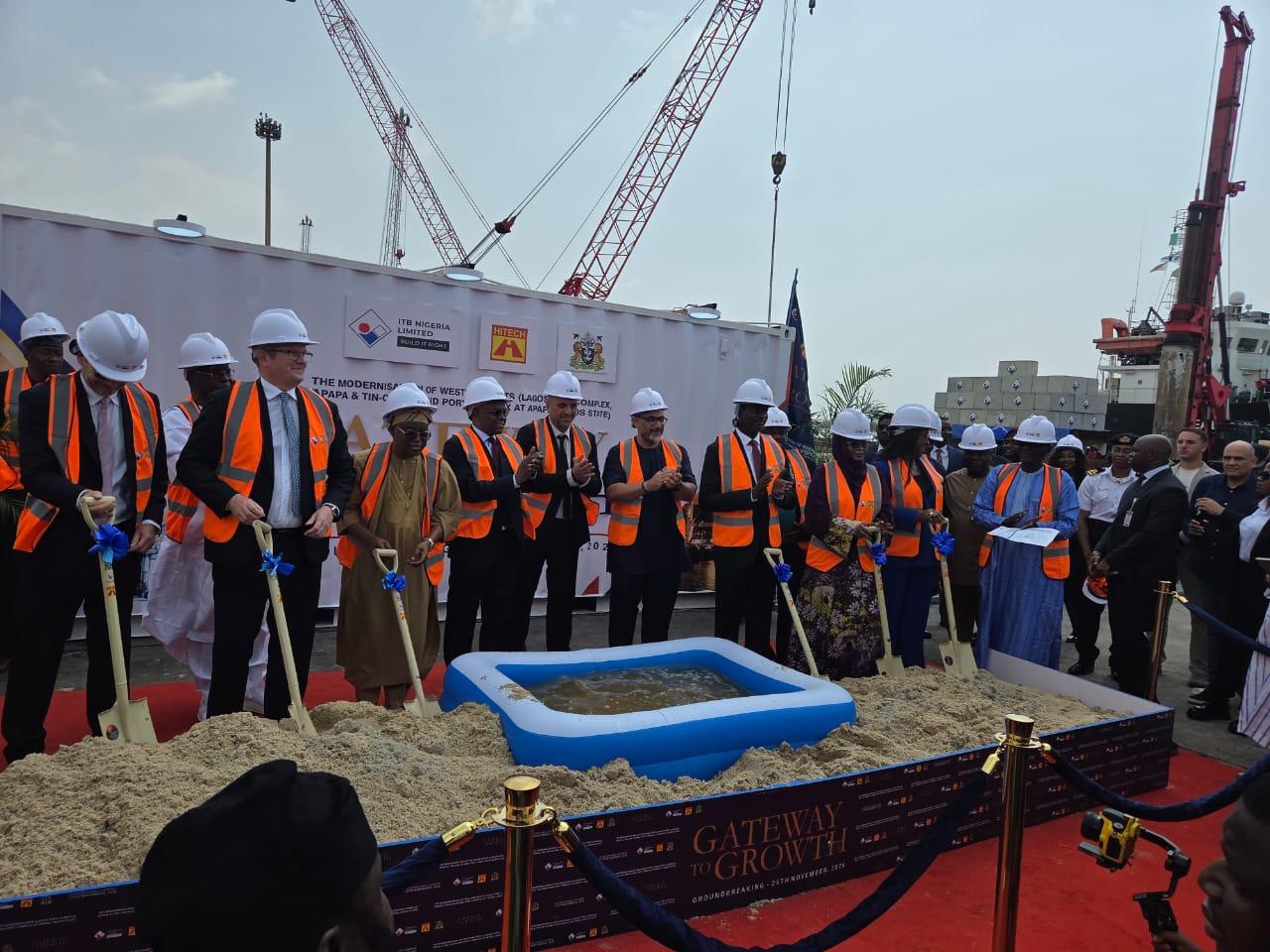
Nigeria broke ground on the rehabilitation of the Lagos Port Complex (Apapa Quays) and the Tin Can Island Port Complex on Wednesday.
The project is backed by a £746 million financing package arranged by Citi and supported by UK Export Finance (UKEF), and it aims to rebuild the country’s busiest maritime corridor.
The two ports handle a large share of Nigeria’s trade, but they have long struggled with ageing facilities and congestion. The upgrade is meant to remove those bottlenecks, speed up the movement of goods and make Nigeria a stronger regional hub for trade and logistics.
“The project will entail the comprehensive rehabilitation and upgrading of critical port infrastructure, including quay walls and berths, dredging and navigation channels, access facilities, cargo-handling equipment and operational systems,” Adegboyega Oyetola, minister of marine and blue economy, said.
He said it would address “longstanding physical constraints while advancing more integrated, efficient and digitally enabled port operations.”
Oyetola said the project would create at least 20,000 direct and indirect jobs, spanning construction, engineering, dredging, logistics, transportation, port operations and related services.
Taiwo Oyedele, minister of finance and coordinating minister of the economy, called the programme a major step towards lowering the cost of doing business in Nigeria. He said it would also make the country more competitive and speed up economic growth.
He said faster port operations would mean fewer delays and lower costs for importers and exporters. That would make Nigerian goods more competitive and benefit manufacturers, farmers and consumers.
The project is funded through UKEF’s Buyer Credit Facility, with Citi coordinating and arranging the financing. Two Nigerian firms, Hitech Nigeria and ITB Nigeria, will carry out the construction. Specialised materials and services will come from UK suppliers, including British Steel.
Funding will be paid out in stages, as agreed milestones are reached and progress is verified.
British Deputy High Commissioner in Lagos Jonny Baxter said the project shows the UK-Nigeria partnership in action.
“Modern ports are essential to a thriving economy. For Nigerian businesses, modernising Apapa and Tin Can Island Ports means the prospect of moving goods more efficiently, reducing delays and connecting more easily with international markets,” he said.
“This is what the UK-Nigeria partnership looks like in practice. British financing, British steel and Nigerian construction expertise coming together to build critical infrastructure that strengthens Nigerian trade and growth. With £746 million in UK-backed financing and at least £236 million in contracts for British businesses, this is a partnership delivering real commercial opportunities and long-term economic benefits for both our countries.”
Nneka Enwereji, managing director and CEO of Citibank Nigeria, pointed to Citi’s four decades in the country.
“The rehabilitation of the Apapa and Tin Can Island ports represents a significant infrastructure investment that can enhance trade efficiency, strengthen connectivity, and drive long-term economic prosperity,” she said.
She added that Citi remains committed to using its “global network, expertise, and capabilities to help advance Nigeria’s economic ambitions and infrastructure agenda.”
More from Economy
See all → Economy
Manufacturers Tell Senate: Keep Tobacco Out of New NAFDAC Bills
 Agriculture
Meet Gangadhar Shetty, the Indian Executive Picked to Lead Nigeria’s Top Palm Oil Producer
 Energy
Nigeria’s Ibom LNG Brings In Afreximbank to Help Raise $1.5bn
 Stocks